Notes from production
Deep dives on system design, security and shipping full stack apps, in English and Bahasa Indonesia.

System Design Roadmap
From packets and TLS to load balancers, sharding, sagas and five real interview systems. Start at part 1 or jump to the one you need.
- 01 Networking Basics
- 02 Core Building Blocks
- 03 Distributed Patterns & Concepts
- 04 Real-World Interview Systems
- Java basics · part 21 of 21
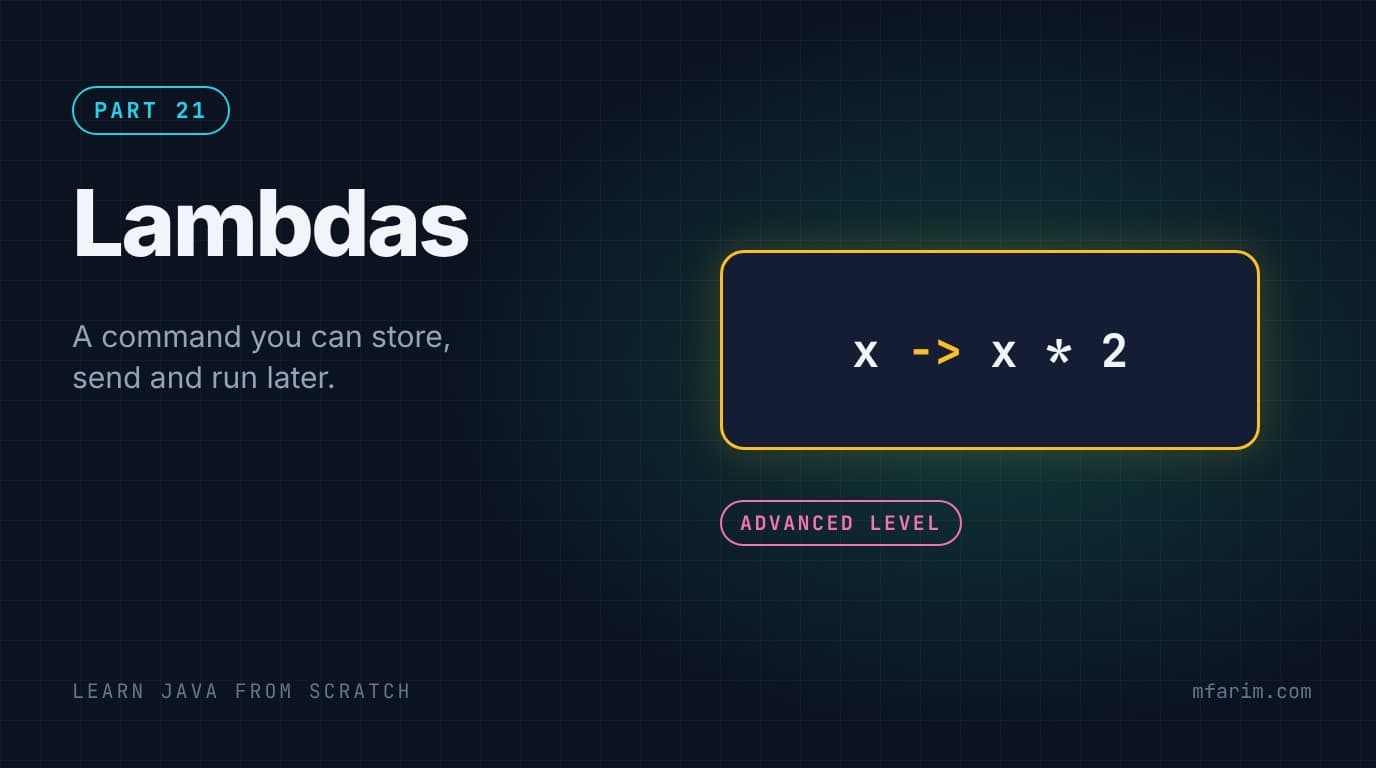
Learn Java from Scratch Part 21: Lambdas — The Arrow, Functional Interfaces & Method References
The twenty-first part of a Java series and the start of the advanced level: a lambda as an instruction card in an envelope, functional interfaces, Predicate, Function, Consumer, Supplier and Runnable, lambdas with collections, method references, a mini calculator, and three traps.
- Java basics · part 20 of 21
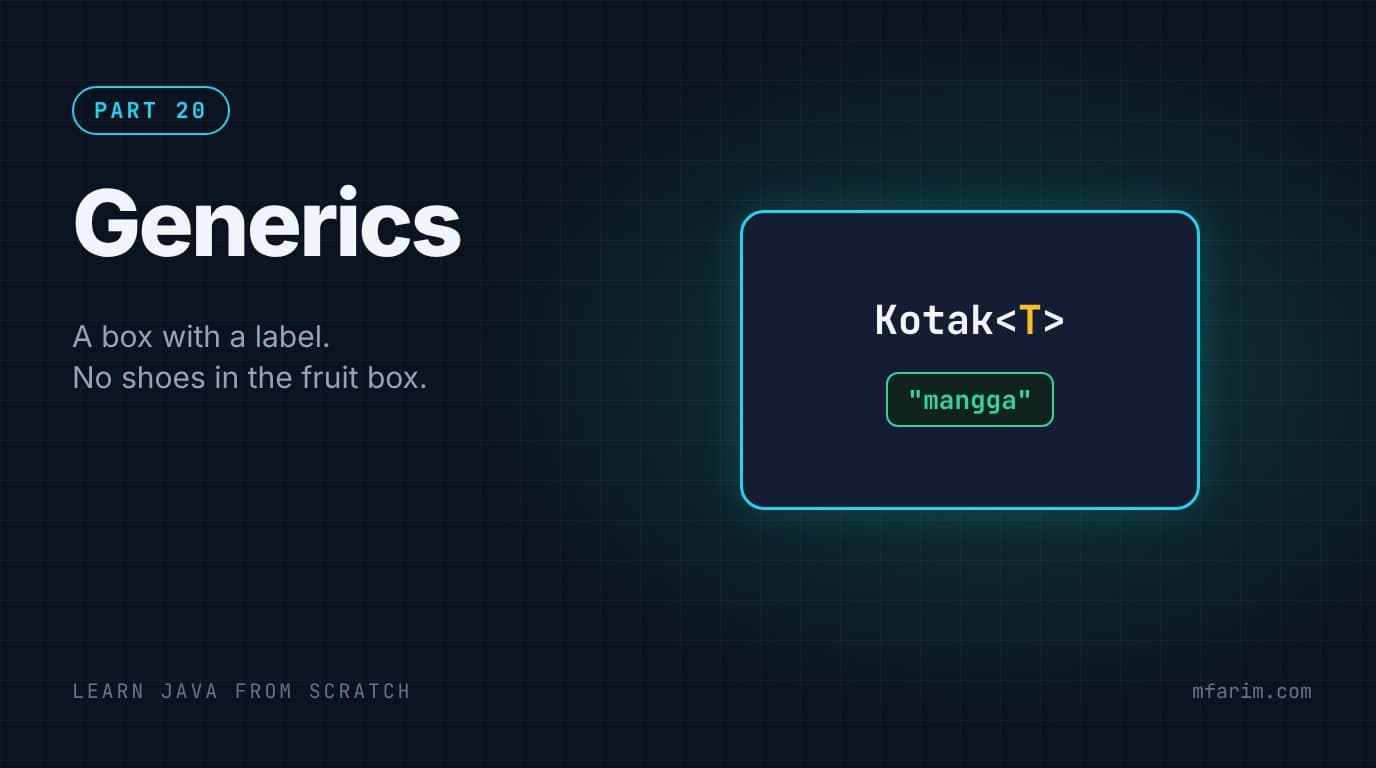
Learn Java from Scratch Part 20: Generics — Angle Brackets, Box<T> & Raw Types
The twentieth part of a Java series and the end of the intermediate level: generics as a box with a label slot, the generic class Kotak<T>, Pasangan<K, V> and generic methods, a leaderboard, and three traps such as a raw type that falls over with ClassCastException.
- Java basics · part 19 of 21
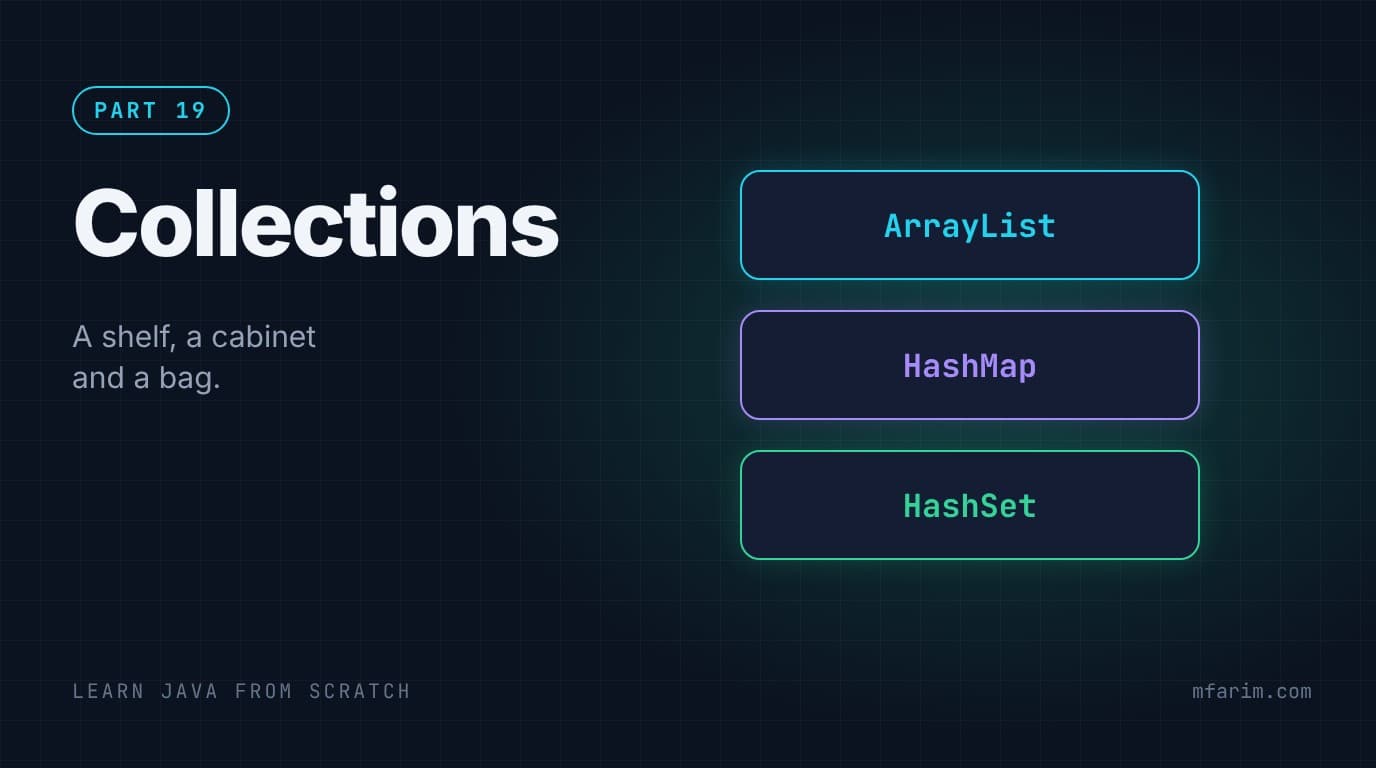
Learn Java from Scratch Part 19: Collections — ArrayList, HashMap, HashSet & Integer
The nineteenth part of a Java series: ArrayList as a growing shelf, HashMap as a labelled filing cabinet, HashSet as a bag with no duplicates, why Integer and not int, counting words with getOrDefault, and three traps such as removing items inside a for-each loop.
- Java basics · part 18 of 21
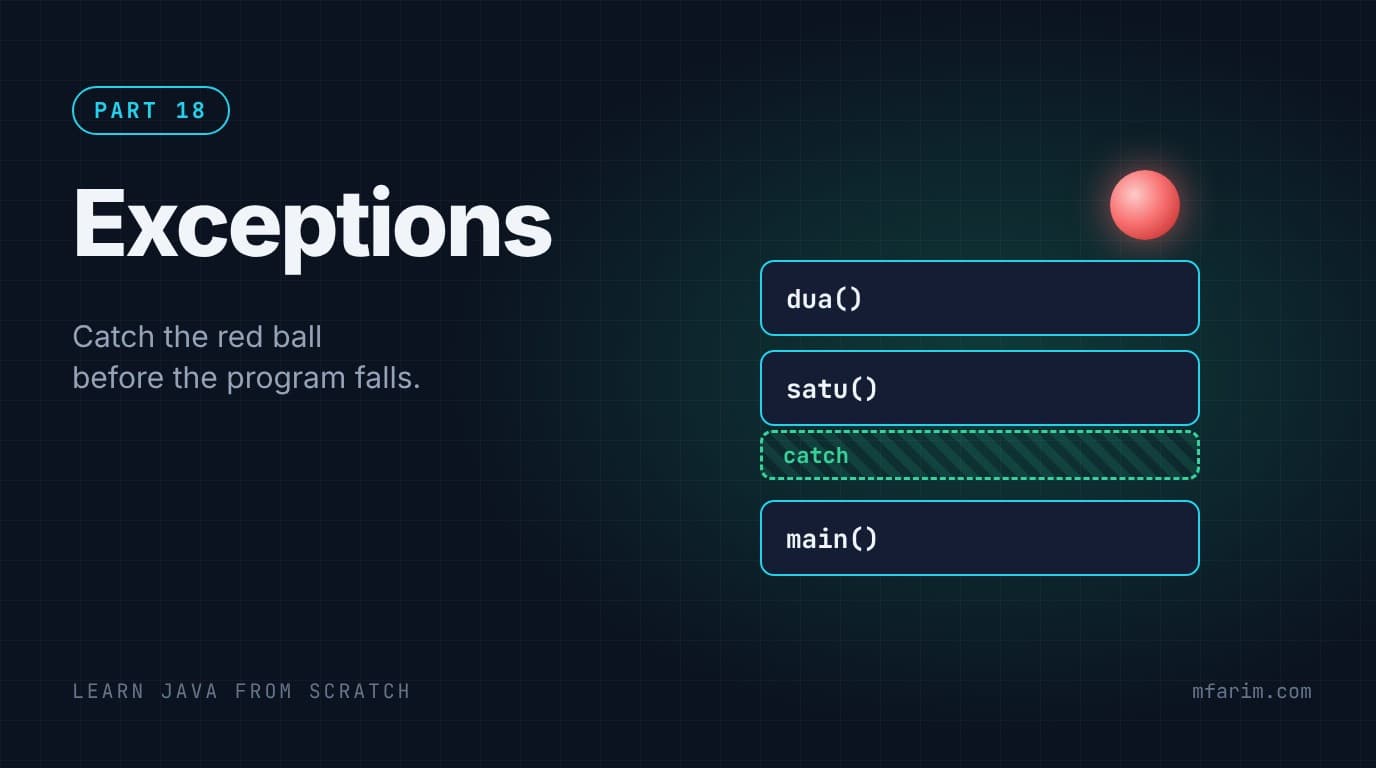
Learn Java from Scratch Part 18: Exceptions — Stack Traces, try, catch, finally & throw
The eighteenth part of a Java series: an exception as a red ball on the pile of trays, how to read a stack trace, try, catch and finally, throwing your own ball with throw, checked exceptions and throws, age input that survives typing mistakes, and three traps.
- Java basics · part 17 of 21
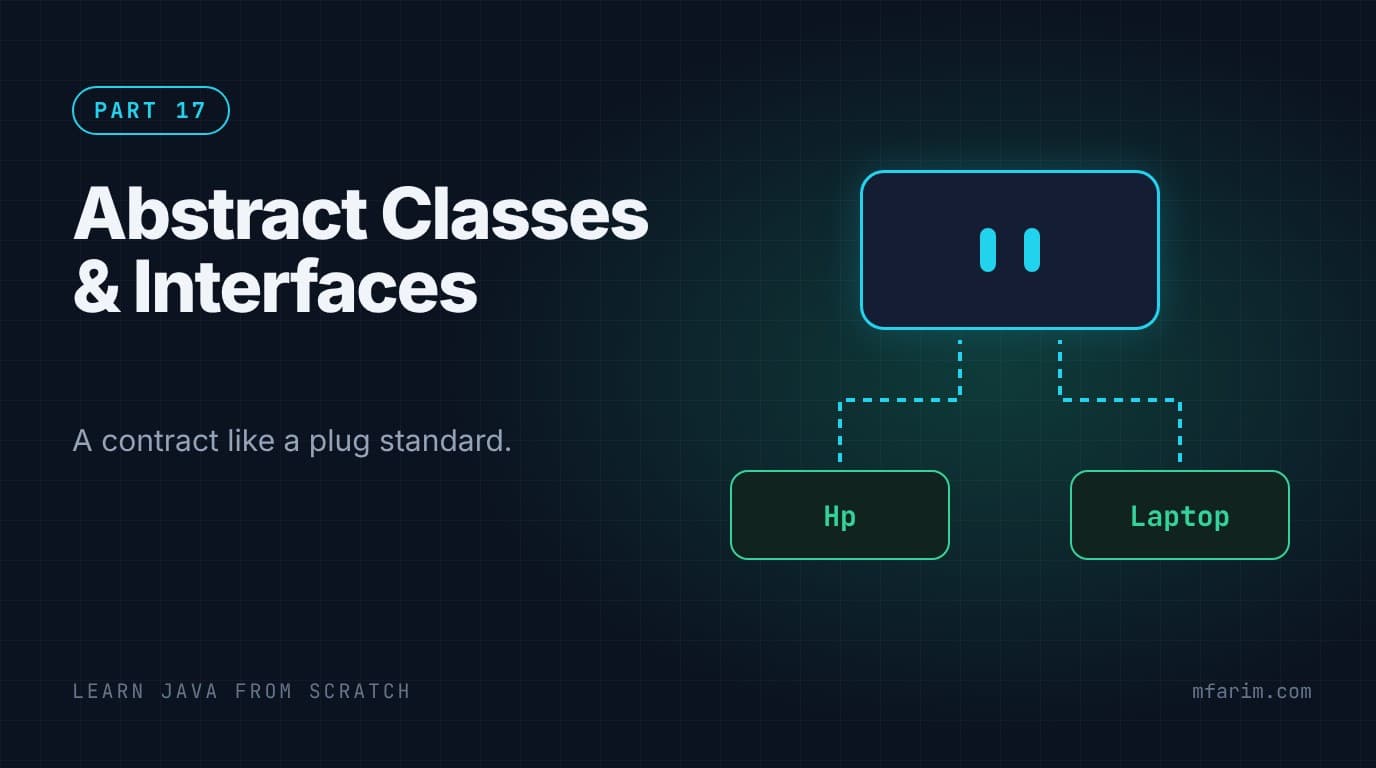
Learn Java from Scratch Part 17: Abstract Classes and Interfaces — Contracts, implements & default
The seventeenth part of a Java series: an abstract class as a half-finished cutter, an interface as a plug standard, implements and several interfaces at once, default methods, when to use which, a shop cashier with cash and an e-wallet, and three contract traps.
- Java basics · part 16 of 21
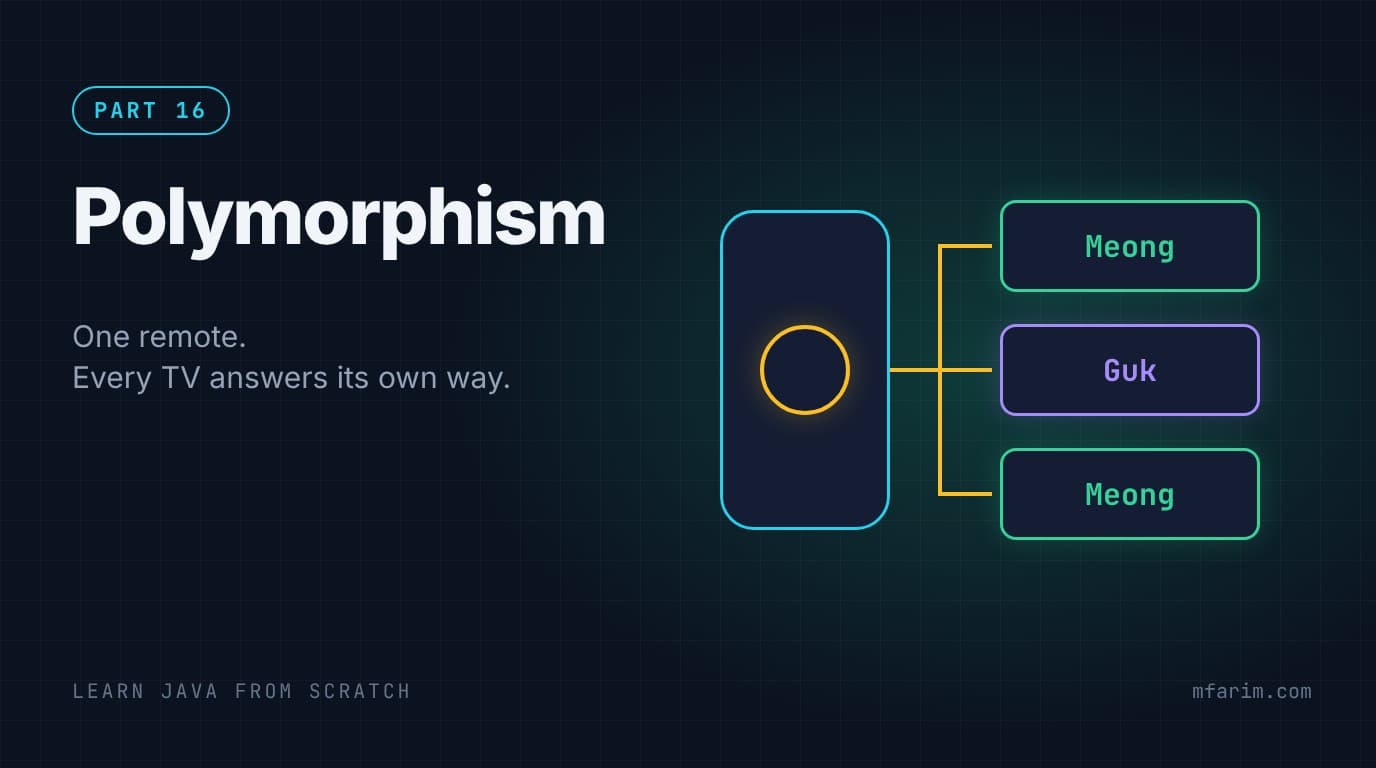
Learn Java from Scratch Part 16: Polymorphism — @Override, Overload & One Remote for Many TVs
The sixteenth part of a Java series: polymorphism as one remote for many TVs, overriding with @Override, one loop for many kinds of objects, override versus overload, teaching equals to your own class, the total area of shapes, and three traps.
- Java basics · part 15 of 21
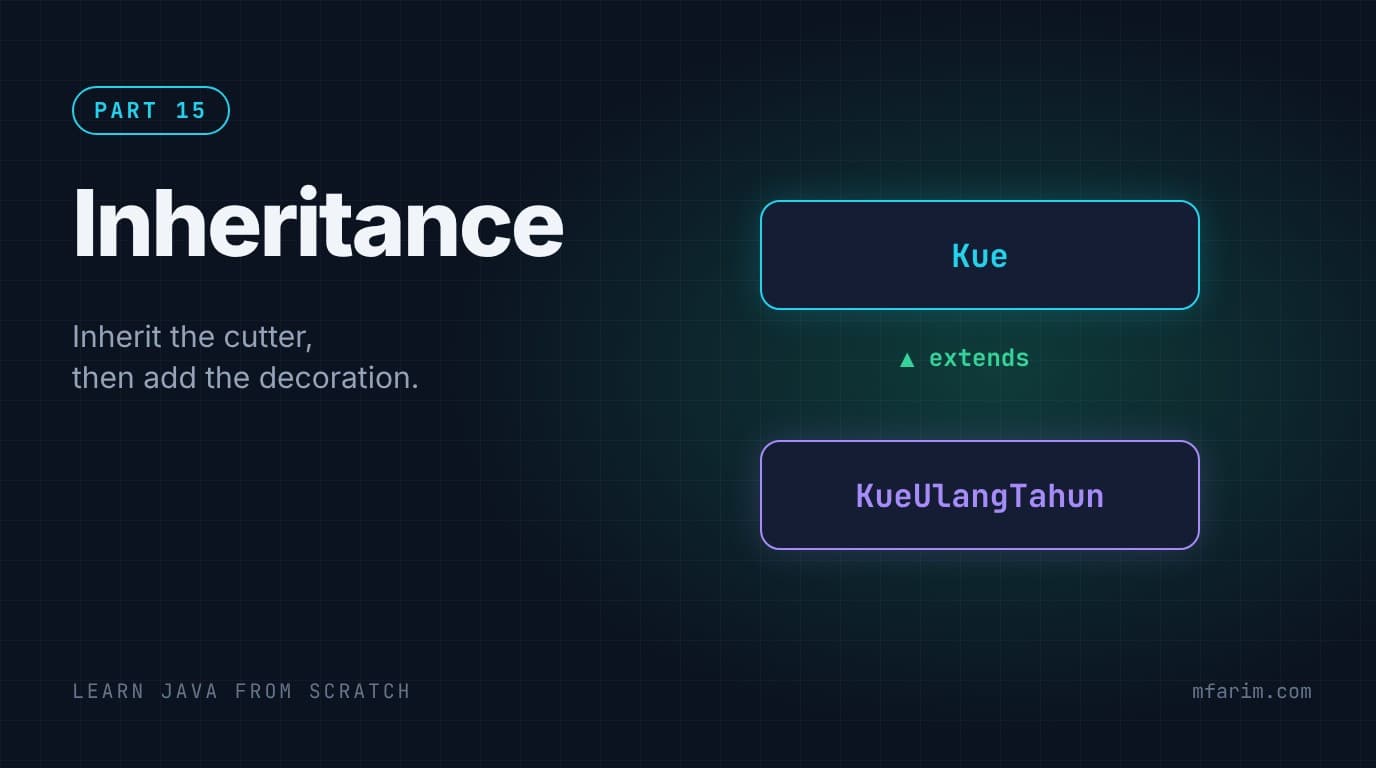
Learn Java from Scratch Part 15: Inheritance — extends, super & the Is-A Test
The fifteenth part of a Java series: inheritance as a parent cutter and a child cutter, extends, super for the parent's constructor and methods, the layers of an object in memory, the is-a test, employee and manager pay, and three traps such as forgetting super.
- Java basics · part 14 of 21
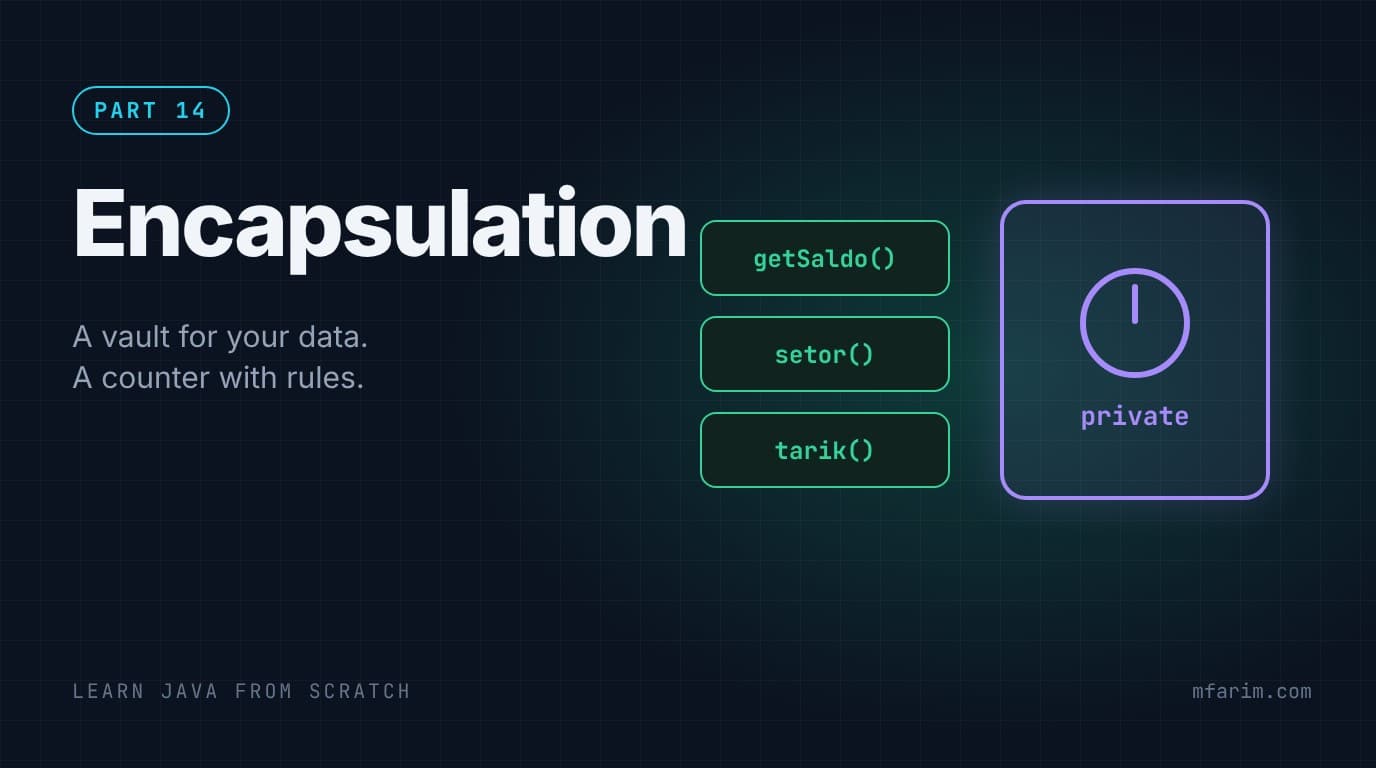
Learn Java from Scratch Part 14: Encapsulation — private, Getters & One Class per File
The fourteenth part of a Java series: encapsulation as a bank vault and counter, private fields and public methods, getters and setters with rules, one class per file with java Main.java, a login account, and three traps such as a setter with no checks.
- Java basics · part 13 of 21
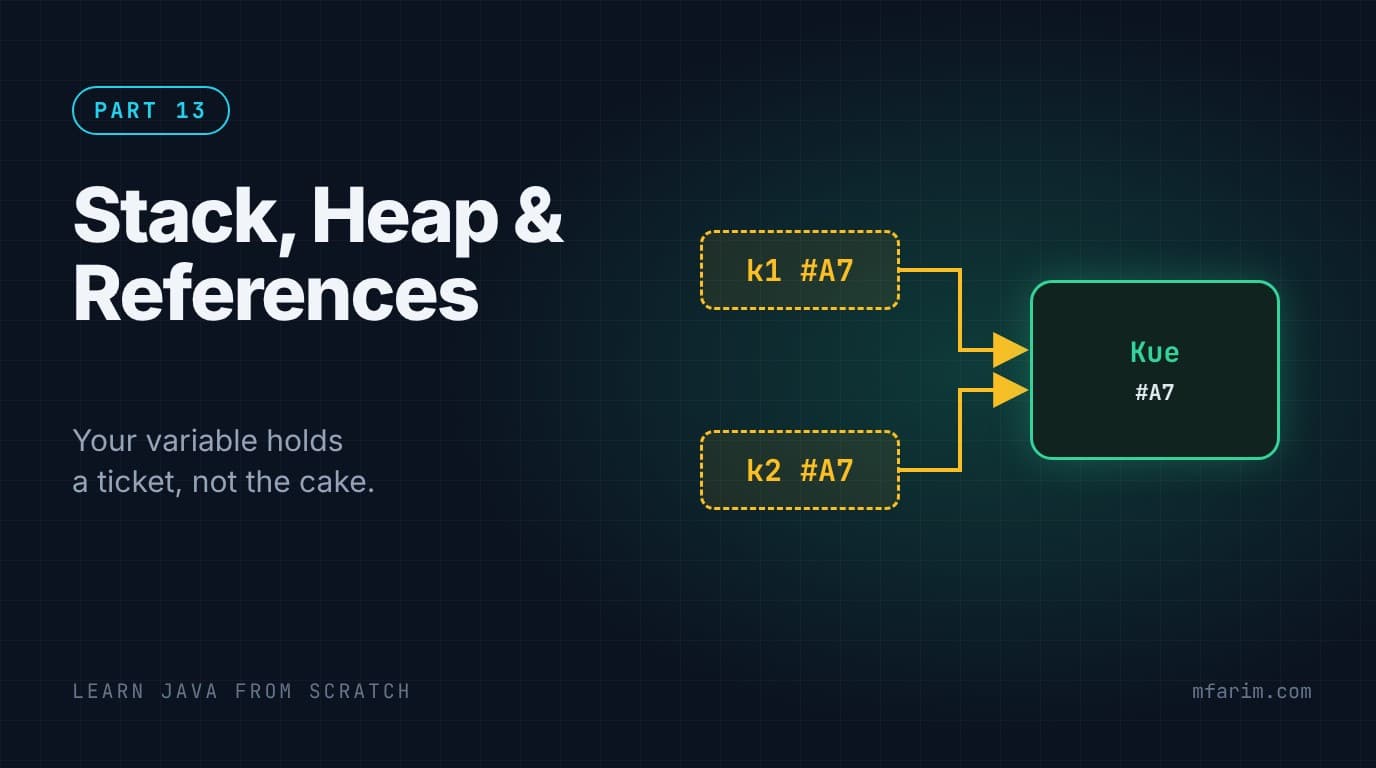
Learn Java from Scratch Part 13: Stack, Heap and References — Address Tickets, == & equals
The thirteenth part of a Java series: the stack as a pile of trays, the heap as a warehouse, a reference as an address ticket, why copying an object variable does not copy the object, == versus equals, a shared wallet, and NullPointerException.
- Java basics · part 12 of 21
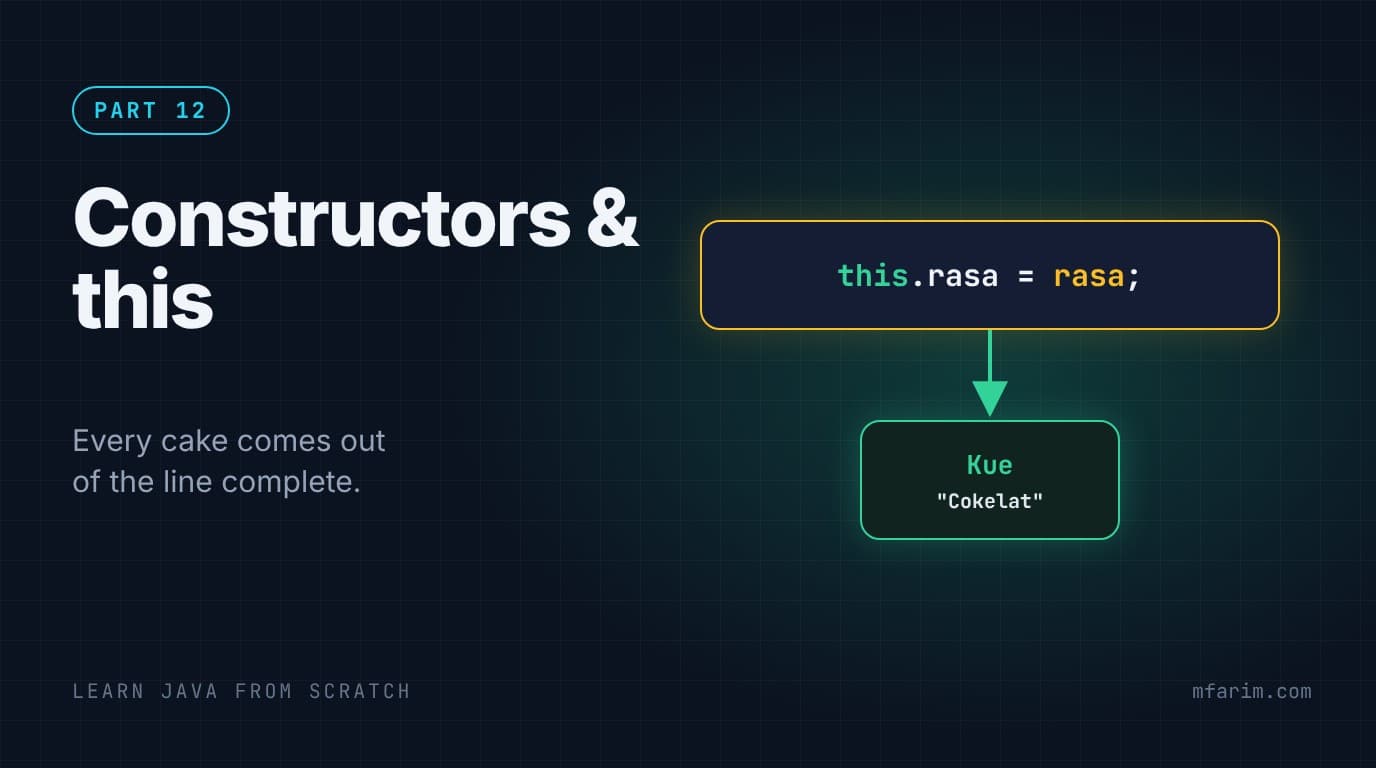
Learn Java from Scratch Part 12: Constructors and this — The Assembly Line, this & static
The twelfth part of a Java series: a constructor as an assembly line so objects are born complete, the word this to tell a field from a parameter, the word static for data owned by the class, savings accounts, and three traps such as forgetting this.
- Java basics · part 11 of 21
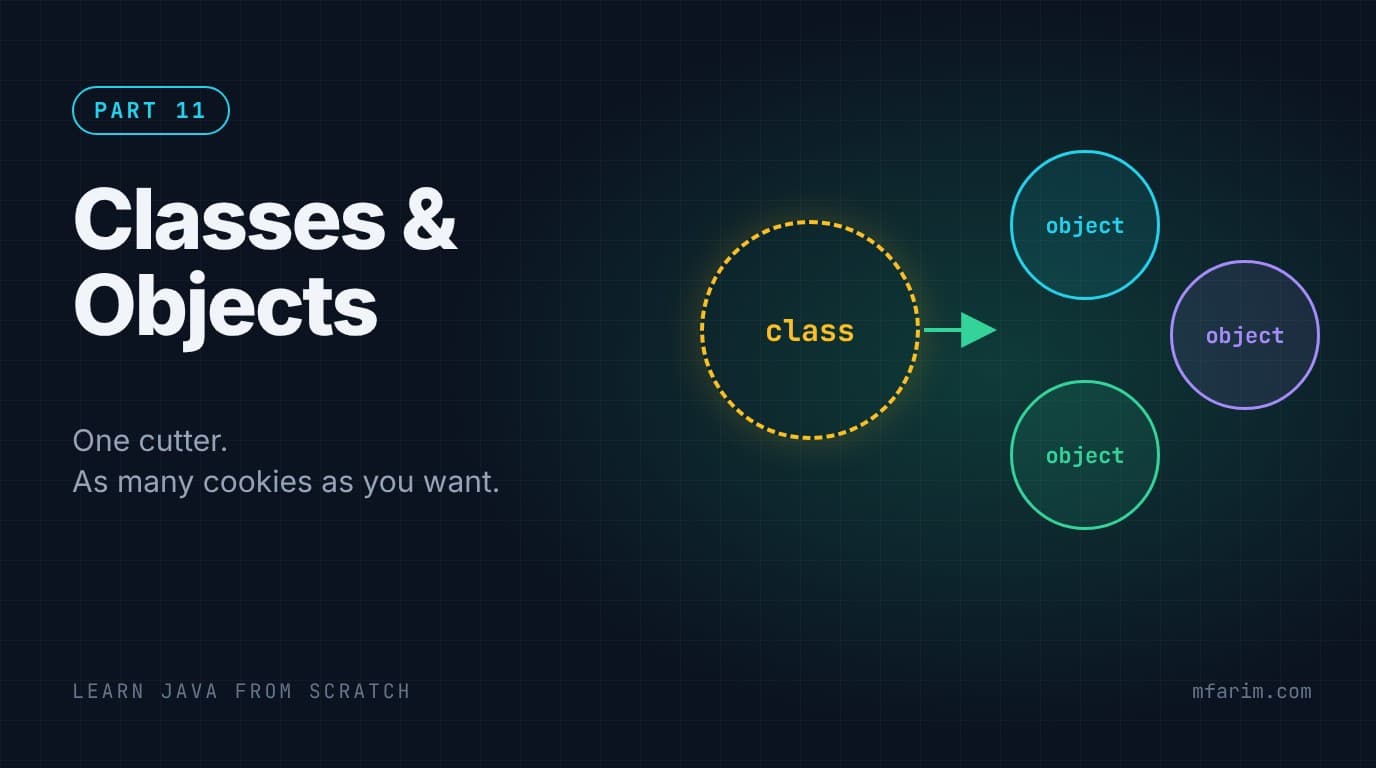
Learn Java from Scratch Part 11: Classes and Objects — Cookie Cutters, Fields, Methods & new
The eleventh part of a Java series and the start of the intermediate level: a class as a cookie cutter and objects as the cookies, fields and methods, making objects with new, reading public static void main, student data, and three traps such as forgetting new.
- Java basics · part 10 of 21
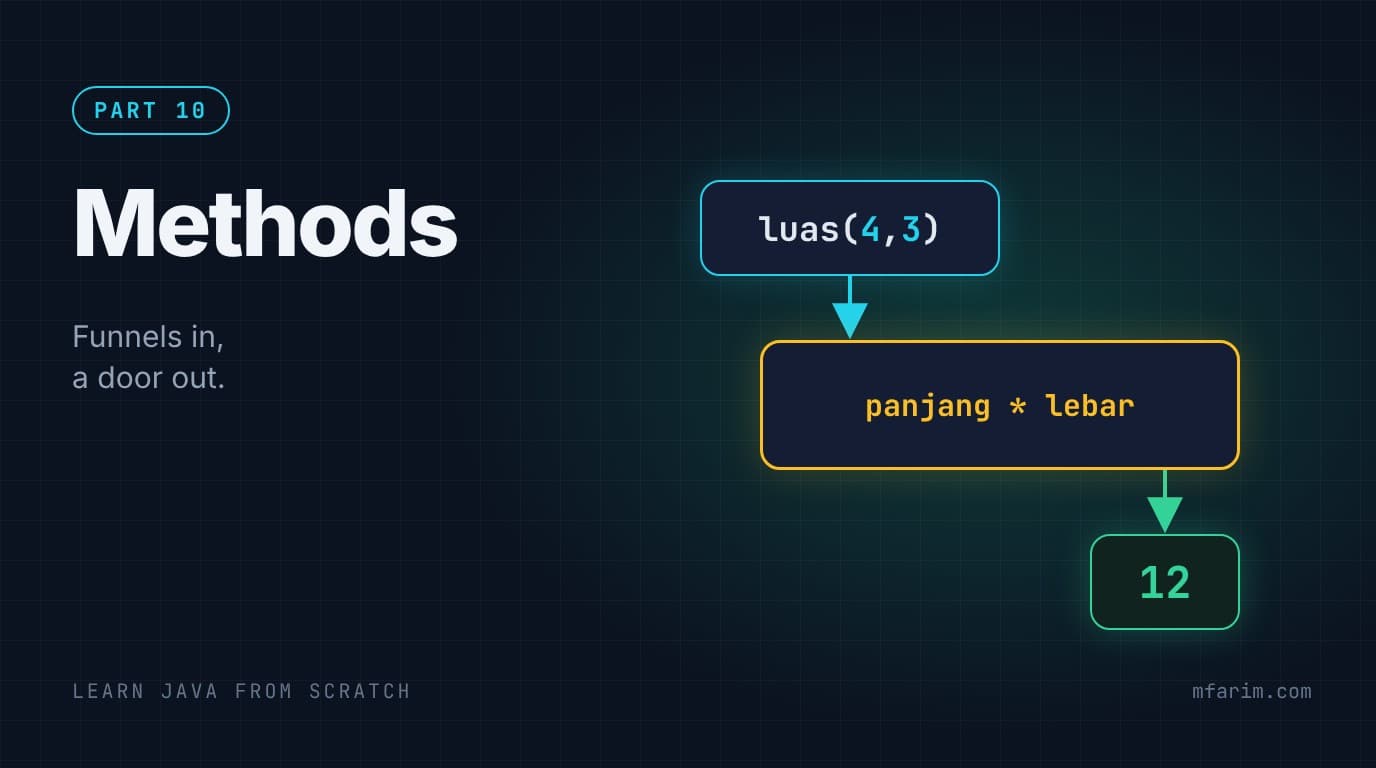
Learn Java from Scratch Part 10: Methods — Parameters, return, void & Scope
The tenth part of a Java series for complete beginners and the end of the beginner level: write your own method, send values in through parameters, get a result back with return, learn what void means, why a variable lives only in its scope, and three traps such as a missing return.